Let me be upfront about something before we start.
There are probably fifty articles out there with the same title as this one. Most of them were written by fashion design colleges in India trying to put themselves at number one or by websites that rank institutions based on data they pulled from other websites. You read three of them, and they start blurring together—same colleges, same descriptions, same “world-class infrastructure” and “industry-relevant curriculum” language.
We wanted to do something different here.
At NIF Global, we have been in the fashion design education space for more than 23 years now. We have worked with thousands of students, some who came in knowing exactly what they wanted, many who had no clue, and quite a few who had been to other institutes before and felt like something was missing. That experience has taught us a lot not just about how to teach design, but about what actually matters when a student is trying to pick the right place.
So this is not a sterile list. This is what we would tell you if you sat across from us and asked, “Where should I study fashion design in India?” based on what we know about the industry, what we have seen work for students, and what we have learned over two decades of doing this.
Let us walk through the options that genuinely deserve your attention.
1. NIF Global, Andheri, Mumbai
Website: https://nifandheri.com/ Location: Andheri, Mumbai Years in operation: 23+ Parent organization: Ishan Education
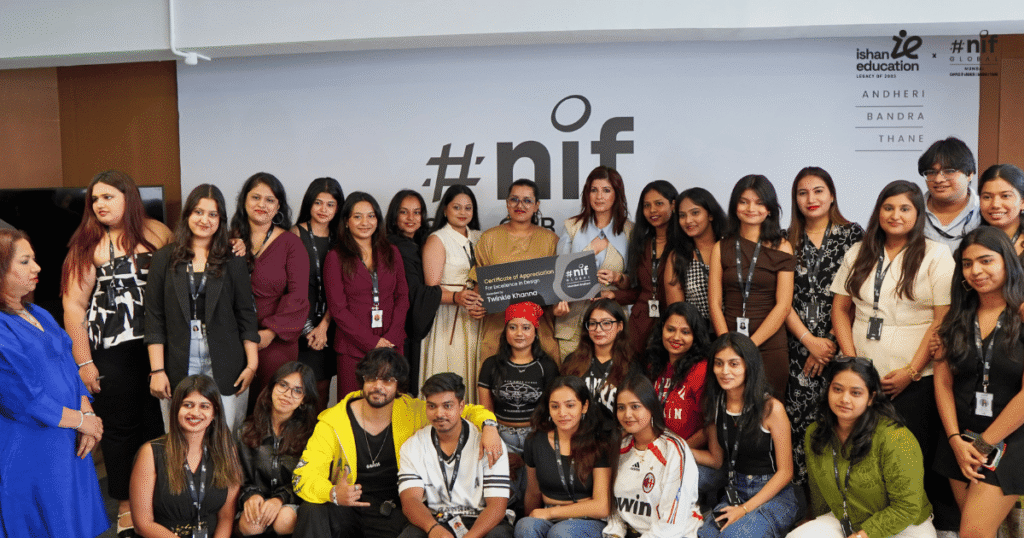
Yes, we are listing ourselves first. And yes, we are going to tell you exactly why.
The thing most fashion design institutes in India get wrong, and we say this having seen it happen for years, is the gap between theory and practice. Most places spend the first few months burying students in textbooks and lectures. Fabric types, color theory, and the history of fashion are all taught in a classroom before anyone picks up a needle or drapes a single piece of fabric.
That is not how we work.
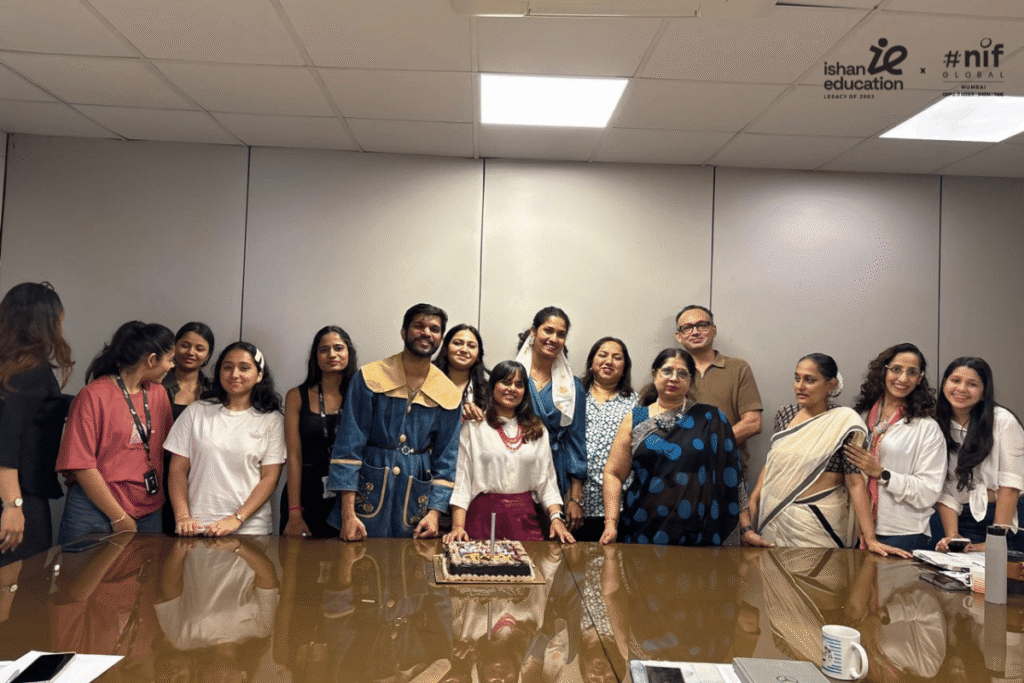
At NIF Andheri, students start doing actual design work from week one. Not as a gimmick. Not “let us do a fun exercise.” Proper, structured design tasks, sketching, understanding silhouettes, handling fabrics, and learning to drape are guided by mentors who sit with you through the process.
The theory comes in alongside the practice. You learn about a fabric type, and then you work with it the same week. You study garment construction principles, and then you construct something. This is not a revolutionary idea; it is how learning actually sticks. But you would be surprised how few institutes actually commit to this approach from day one.
Here is what the program actually covers:
The fashion design program goes deep into the areas that matter to a working designer: fabric science, pattern-making, garment construction, draping, fashion illustration, styling, and fashion business fundamentals. But it is not just about covering topics. Every module involves hands-on assignments based on real industry scenarios. Not hypothetical ones.
The mentors here are not the type who give you a lecture and disappear. They review your work regularly. They give specific, actionable feedback, not just “good job” or “try harder.” And they track your individual progress, because every student learns differently and moves at a different pace.
NIF Global Andheri has trained more than 25,000 students over the years. The placement record stands at 100%. That is not a marketing number; it comes from two decades of building actual relationships with employers, understanding what the industry needs, and making sure our students are prepared to deliver from day one of their job.
Programs you can choose from:
The structure at NIF Andheri is designed to be flexible. You can enter after Class 10th with a Foundation Certificate and work your way up. Or you can join after Class 12th for a 4-year B.Des or 3-year B.Voc. There are also postgraduate options for graduates. NSDC and Skill India approve all programs and come with NIF Global/LST Certificates.
Here is the full list Foundation Certificate (1 year, after Class 10th), Advanced Certificate (1 year), Specialization Certificate (1 year), Super Specialization Certificate (1 year), B.Des (4 years, after Class 12th), B.Voc (3 years, after Class 12th), M.Voc (2 years, after Graduation), Post Graduate Certificate (1 year), and Post Graduate Specialization Certificate (1 year).
One more thing about the location. Andheri is not just convenient for commuting; it sits in the middle of Mumbai’s fashion industry. Fabric markets in Dadar and Hindmata, production units in Lower Parel and Andheri itself, designer studios and showrooms across Bandra and Juhu. When we send students for industry visits or workshops, everything is within reach. That proximity is part of the education, and it is something a campus in a remote location cannot replicate.
Honest assessment: If you are someone who learns better by doing than by listening, and you want a place where the mentors are genuinely invested in your individual growth, not just your batch’s average performance, NIF Andheri is built for exactly that.
2. NIF Global, Bandra, Mumbai
Website: https://nifbandra.com/ Location: Bandra, Mumbai
Same DNA as Andheri. Same curriculum, same teaching philosophy, same parent organization in Ishan Education.
The difference is the neighborhood.
Bandra has its own creative energy. It has been one of Mumbai’s most design-forward areas for years, full of independent fashion boutiques, lifestyle stores, stylist studios, and a general creative scene that seeps into how you think about design when you are studying there. Some of our students specifically choose the Bandra campus because they want that environment as part of their daily experience.
The learning model is identical. Hands-on from day one. One-on-one mentorship. Regular project reviews. Industry workshops and guest sessions. And the same placement support that NIF Global is known for.
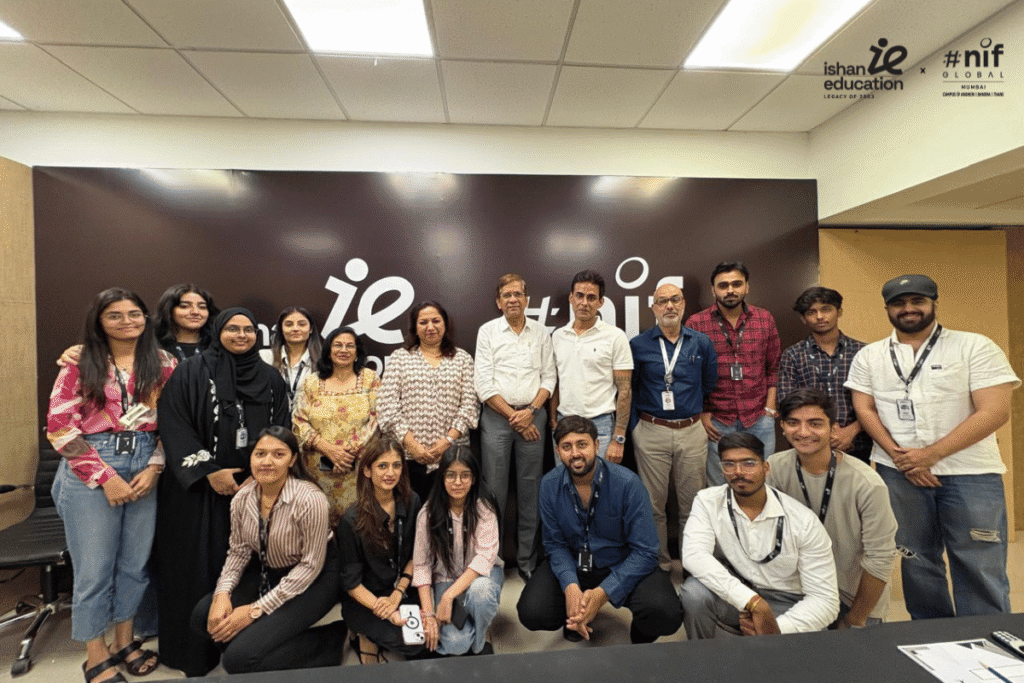
If you live in the western suburbs or are drawn to Bandra’s creative atmosphere, this is the campus to consider. You are not sacrificing anything in terms of quality , just choosing a different setting.
3. National Institute of Fashion Technology (NIFT), Delhi
Location: Hauz Khas, New Delhi Established: 1986 Type: Government Statutory Institute under NIFT Act, 2006
If you ask anyone in India to name a fashion design college, NIFT Delhi will be the first name out of their mouth. And that reputation is earned.
NIFT was the first serious fashion education institute in the country. It was set up in 1986 under the Ministry of Textiles. In 2006, it was given statutory status through an Act of Parliament; the President of India is its Visitor. That is the level of institutional weight behind this name.
The Delhi campus is the flagship. It is where NIFT started, initially housed in a small section of Indraprastha Stadium before moving to the Hauz Khas campus, designed by architect Gautam Bhatia. The faculty here includes some of the most experienced design educators in the country, and the alumni network is genuinely staggering. Many of India’s biggest fashion labels were founded by NIFT graduates.
NIFT Delhi offers B.Des in fashion design, textile design, knitwear design, leather design, accessory design, and fashion communication. There is also B.F.Tech for students interested in apparel production and the technology side of fashion. For postgraduates, there are M.Des, MFM (Master of Fashion Management), and M.F.Tech
.
The admission process is competitive. You need to clear the NIFT Entrance Exam (NIFTEE), which includes a Creative Ability Test (CAT) and General Ability Test (GAT), followed by a Situation Test where you actually have to make something with given materials. It is not easy. Thousands apply for a limited number of seats.
The total fee for the B.Des program is around Rs. 14 lakh over four years. Not cheap, but the degree carries serious weight in the job market. The NIFT placement network includes everyone from export houses to international luxury brands.
Honest assessment: If you can get in, NIFT Delhi gives you a brand name that opens doors. But the admission process is highly competitive, batch sizes are large, and the learning experience depends heavily on your own initiative. It is not the kind of place where someone holds your hand.
4. National Institute of Design (NID), Ahmedabad
Location: Ahmedabad, Gujarat Established: 1961 Type: Government Institute of National Importance
NID is actually older than NIFT. It was set up in 1961 by the Government of India, making it one of the oldest design schools in the country. And in 2014, it was declared an Institute of National Importance by Parliament, a distinction held by only a handful of institutions in India.
Now, NID is not a fashion-specific institute. It covers a wide range of design disciplines, including industrial, communication, film, animation, and product design. But its textile design and apparel design programs are among the finest you will find anywhere.
What makes NID special is the philosophy. They do not just teach you how to make things. They teach you how to think about making things. The entire pedagogy is built around design thinking and problem-solving. Studio work is at the core: you spend your time creating, testing, gathering feedback, and iterating. NID describes their approach as “hands-on, minds-on,” and from what their graduates produce, it clearly works.
Admission is through the NID Design Aptitude Test (DAT), a two-stage process with prelims (written) and mains (studio test and interview). It is demanding—the total B.Des fee is approximately Rs. 17 lakh across four years.
NID Ahmedabad has been ranked among the top 51-100 art and design institutes globally by QS World University Rankings. That is not a number to take lightly.
Honest assessment: NID is for students who want to understand design at a deep, conceptual level. If your interest is narrowly focused on just making clothes, it may feel too broad. But if you want to become a designer who thinks beyond garments, who understands materials, systems, craft traditions, and innovation, NID is genuinely world-class.
5. NIF Global, Thane
Website: https://nifthane.com/ Location: Thane, Mumbai Metropolitan Region
For students in Thane, Navi Mumbai, Dombivli, Kalyan, or anywhere in the extended Mumbai metropolitan region this campus exists because we understood that a two-hour daily commute to Andheri or Bandra is not realistic for everyone.
The Thane campus follows the same curriculum, mentor-driven teaching model, and placement infrastructure as our other campuses. The NSDC/Skill India-approved programs are identical. The quality of education does not change because of the pin code.
What has changed is Thane itself. The city has grown substantially in the last decade, and design studios, retail spaces, and creative businesses are emerging here. Students at NIF Thane benefit from being plugged into the broader Mumbai fashion ecosystem while studying in a campus that is easier to access from the eastern corridor.
Honest assessment: If you want the NIF Global experience but Andheri or Bandra is too far for your daily commute, Thane offers the same without compromise.
6. NIFT, Kolkata
Location: Salt Lake City, Kolkata, West Bengal Established: 1995 Type: Government
NIFT Kolkata is one of the five oldest centers in the NIFT network, and it has quietly built a strong reputation as the leading fashion design institute in eastern India.
The campus was founded in 1995 and sits in Salt Lake City, Kolkata. It offers B.Des programs in fashion design, accessory design, leather design, textile design, knitwear design, and fashion communication, plus B.F.Tech in apparel production and MFM at the postgraduate level.
What makes Kolkata an interesting location for fashion education is the city’s deep relationship with textiles and craftsmanship. Bengal has a centuries-old tradition of handloom weaving, Jamdani, Baluchari, and Kantha work. Studying here puts you close to that heritage in a way that Delhi or Mumbai cannot quite match. Many of the projects at NIFT Kolkata involve direct engagement with artisan communities and craft clusters in the region.
The placement cell brings in recruiters like Arvind Garments, Benetton, Pantaloon, Godrej, and several leather and export companies. According to recent student reviews, the average placement package is around Rs. 7 LPA, though this varies by specialization.
The fee for B.Des at NIFT Kolkata ranges from Rs. 5.45 lakh to Rs. 12.96 lakh, depending on the specialization, and is generally more affordable than the Delhi campus. India Today 2025 ranked it 8th in the fashion design category.
Honest assessment: If you are from eastern India or drawn to the idea of studying fashion in a city with a genuine textile heritage, NIFT Kolkata is a strong choice. It does not have the glamour of the Delhi or Mumbai campuses, but the education is solid, and the costs are lower.
7. NIFT, Bengaluru
Location: HSR Layout, Bengaluru, Karnataka Established: 1996 (some sources say 1997) Type: Government
NIFT Bengaluru has been consistently ranked in the top 3 NIFT campuses for three years running in the fashion design category. India Today 2025 placed it at number 2 nationally. That is not something to overlook.
The campus is in HSR Layout, a part of Bengaluru that sits right between the city’s tech corridor and its growing creative and fashion scene. NIFT Bengaluru offers B.Des in fashion design, fashion communication, accessory design, knitwear design, textile design, and apparel production.
One significant advantage here is the international exposure. NIFT Bengaluru has active student exchange programs with institutions like the Fashion Institute of Technology in New York, Saxion University in the Netherlands, and Queensland University of Technology in Australia. If studying abroad for a semester or exposure to global design practices matters to you, this campus offers real pathways.
Bengaluru’s fashion industry has matured considerably. It is no longer just a tech city; it now has a thriving independent designer scene, strong retail presence, and growing demand for fashion professionals. Companies like Myntra (headquartered in Bengaluru), Flipkart’s fashion division, and several export houses recruit actively from this campus.
Honest assessment: If you want the NIFT degree in a city that combines tech, fashion, and a genuinely pleasant quality of life, Bengaluru is hard to beat. The campus is smaller and potentially more close-knit than Delhi.
8. NIFT, Hyderabad
Location: Madhapur (between Hi-Tech City and Shilparamam), Hyderabad, Telangana Established: 1995 (temporary campus), permanent campus from 1999 Type: Government
NIFT Hyderabad occupies an interesting position, physically located between Hyderabad’s IT hub (Hi-Tech City) and the State Craft Village (Shilparamam). That is not just a nice fact for the brochure. It genuinely reflects what the campus offers: a blend of modern design thinking and traditional craft engagement.
The campus has been ranked 4th nationally by India Today 2025 in the fashion design category. It offers B.Des in fashion design, accessory design (with a unique focus on fashion and lifestyle accessories, including interior products and handcrafted accessories), textile design, knitwear design, and fashion communication.
NIFT Hyderabad has its own collaborations, including with Queensland University of Technology in Australia. Recruiters include IKEA Hyderabad, Woodland, Silver Linings, and various export houses.
Telangana and Andhra Pradesh have rich textile traditions, such as Pochampally Ikat, Mangalagiri cotton, and Gadwal sarees. Students at this campus get direct access to these craft traditions through field visits and industry engagement.
Honest assessment: A well-regarded NIFT campus that gives you the government institute pedigree, craft heritage exposure, and a growing city to work in. A good option for students from southern or central India who do not want to go as far as Bengaluru or Chennai.
9. NIFT, Gandhinagar
Location: Infocity area, Gandhinagar, Gujarat Established: 1995 Type: Government
NIFT Gandhinagar is closely connected to Ahmedabad, India’s textile manufacturing capital. That is not just a geographic detail; it fundamentally shapes the experience here.
Gujarat is home to some of the largest textile and garment manufacturers in the country. Students at NIFT Gandhinagar get exposure to this ecosystem through firsthand factory visits, internships with manufacturers, and collaborations with the export industry. If the business and production side of fashion interests you as much as the design side, this campus offers a particularly grounded experience.
The campus is well equipped with advanced design studios, textile labs, IT-enabled classrooms, and a well-stocked library. NIFT Gandhinagar offers B.Des in fashion design, textile design, accessory design, and fashion communication, along with B.F.Tech in apparel production.
One reviewer on a college portal summed it up well: “At NIFT, everything was taken seriously because the unicorns of the business were stakeholders. They would take students for internships in their companies, and everything was taught from designing to manufacturing to sales.”
NIFT Gandhinagar has also been active in research and conferences, hosting international events on topics like sustainable fashion, India’s craft legacy, and the intersection of design and technology.
Honest assessment: Not as hyped as Delhi or Bengaluru, but genuinely valuable if you want to understand the manufacturing and business side of fashion up close. The proximity to Ahmedabad’s textile industry is a real advantage.
10. Footwear Design and Development Institute (FDDI)
Location: 12 campuses across India, Noida (flagship), Chennai, Kolkata, Hyderabad, Chandigarh, Jodhpur, Patna, and others. Established: 1986 Type: Government Institute of National Importance under FDDI Act, 2017
FDDI is a name most people do not immediately associate with fashion design, and that is partly what makes it interesting.
It was originally established under the Ministry of Commerce and Industry, with a focus on footwear design and leather goods. But over the years, FDDI has expanded significantly. It now offers B.Des in Fashion Design alongside its core programs in footwear design and leather product design. In 2017, it was declared an Institute of National Importance through an Act of Parliament, the same status that NID holds.
FDDI has 12 campuses across the country, making it one of the most geographically accessible government design institutes. The Noida campus is the flagship, but campuses in Chennai, Hyderabad, Kolkata, and Chandigarh are also well-regarded.
The B.Des fee at FDDI is around Rs. 2.52 lakh per year, substantially lower than those at NIFT or NID. Admission is through the All India Selection Test (AIST), and students with valid UCEED scores can also get admission.
The placement record varies by campus, but the Noida campus reports packages in the range of Rs. 8-12 LPA, with companies such as Adidas, Bata, H&M, Zara, Reliance Retail, and Aditya Birla Fashion visiting for recruitment.
Honest assessment: If you are open to exploring fashion design alongside related disciplines like footwear, leather goods, and retail, and you want a government-backed degree at a fraction of the cost of NIFT or FDDI, then FDDI is worth a serious look. The fashion design program is newer than NIFT’s, so the alum network is not as established. But the institute is growing, and the value for money is hard to argue with.
So, How Do You Actually Choose? Here Is What We Tell Our Students.
After working with students for over 23 years, here is what we have found consistently matters more than rankings:
The teaching approach matters more than the brand name.
Some students need large, structured environments. Others need small batches where mentors know their name and track their progress week by week. These are fundamentally different experiences, and neither is wrong. But you need to be honest about which one you are.
A friend of ours runs a textile business in Mumbai. She hires fresh graduates every year. She once told us, “I do not care which college name is on the resume. I care whether the person can actually drape a garment, understand fabric behavior, and work under a deadline. You would be surprised how many degree holders from top institutes cannot.” That stuck with us.
Check what happens after placements, not just the placement number.
A 100% placement rate sounds great. But what matters is whether students stay in those jobs. Do they grow? Are the roles relevant to what they studied, or are they getting placed in generic positions to fill the number? Ask current students and alums. They will tell you what the brochure will not.
Think about money seriously.
Fashion design education can range from Rs. 2-3 lakh for a short-term program to Rs. 20 lakh or more for a four-year degree at a premium institute. More expensive does not always mean better. We have seen students from modest programs outperform graduates from big-name colleges because they had better mentors and more hands-on practice. Do not bankrupt your family for a brand name if there is a genuinely good option within your budget.
Location is part of the education.
Studying fashion design in Mumbai, Delhi, or Bengaluru puts you physically close to the industry fabric markets, designer studios, fashion weeks, and production houses. That exposure adds something that a campus in a smaller city, no matter how good, cannot replicate. Walk through Hindmata market in Mumbai on a weekday morning, and you will learn more about fabrics in one hour than in a week of lectures. That is not an exaggeration.
Visit the campus before you decide.
Look at the studios. Are students actually working, or is it empty? Talk to people who are currently studying there, not the “student ambassadors” who have been prepped with talking points, but actual students sitting in the cafeteria. Ask them what a normal week looks like. Ask them if they feel supported. Their answers will tell you everything.
Questions People Ask About Fashion Design Institutes in India
Can I study fashion design after Class 10th?
Yes, you can. At NIF Global, we offer a Foundation Certificate program that accepts students after Class 10th. This gives you a head start: you begin building real design skills early, then progress into advanced and specialized programs. Not many institutes offer this option, but it is genuinely useful for students who already know they want to pursue design and do not want to wait until after 12th to begin.
How much does fashion design education cost in India?
It depends widely on where you go. Government institutes like NIFT charge approximately Rs. 10-14 lakh for a four-year B.Des. NID is around Rs. 17 lakh. FDDI is significantly cheaper at around Rs. 10 lakh for B.Des. At NIF Global, programs are structured to be accessible across different budgets, with everything from one-year certificates to full degree programs.
What kind of jobs can I get after studying fashion design?
This is a longer list than most people expect. Beyond the obvious role of “fashion designer,” you can work as a textile designer, pattern maker, fashion stylist, visual merchandiser, fashion buyer, fashion journalist, trend forecaster, brand manager, costume designer, production manager, quality controller, or start your own label. The fashion industry is massive, and it needs people in far more roles than just the creative ones.
What is the difference between B.Des and a diploma?
A B.Des is a four-year degree recognized by UGC. It covers design theory, advanced practical skills, research, and typically includes an internship component. A diploma is usually shorter, one to two years, and focuses more on specific practical skills. Both can lead to jobs in the fashion industry, but a B.Des opens up more options for senior roles, higher education, and teaching positions later on.
Is fashion design a good career in India right now?
India is one of the largest textile and apparel markets in the world. The industry employs millions of people and continues to grow. With the rise of e-commerce, D2C fashion brands, sustainable fashion, and digital design tools, the demand for trained fashion professionals is higher than it has been in years. The key is getting the right training. A certificate alone will not get you far. Skills, portfolio, and industry exposure are what actually matter.