
Here is something most “top colleges” lists will not tell you.
Interior design education in India is a mixed bag. There are some genuinely excellent institutes where you will learn to think about space, materials, light, and human behavior in ways that stay with you for your entire career. And then some places will teach you to use AutoCAD and 3D Max, hand you a certificate, and call it a day.
The gap between the two is enormous. And if you are someone looking for the best interior design institutes in India right now, telling the difference from a website alone is almost impossible. Every college claims “industry-relevant curriculum” and “practical learning.” Very few actually deliver it.
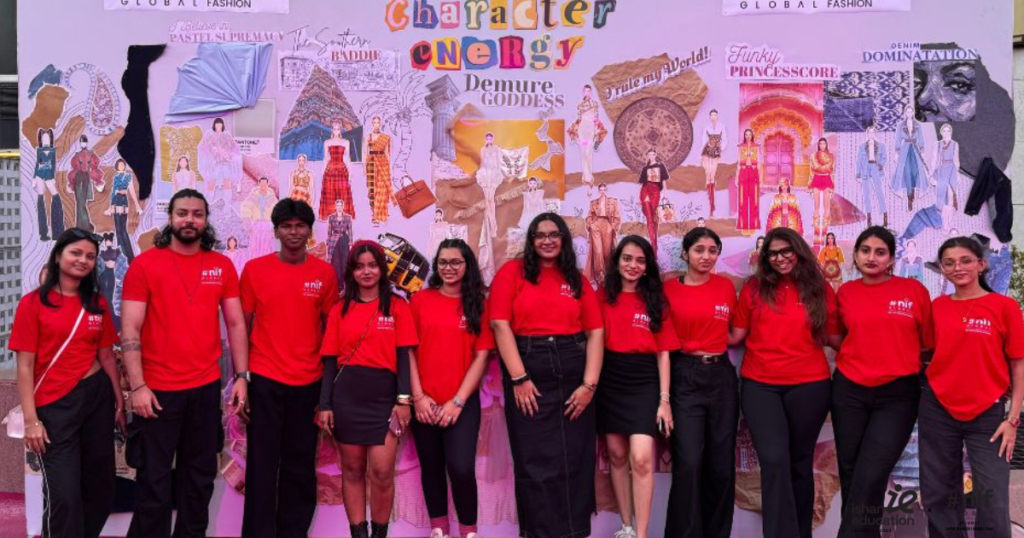
We are writing this from NIF Global, an institute that has been teaching design for over 23 years. Interior design is one of our core programs, and we have seen firsthand what good design education looks like, what bad design education looks like, and what actually matters when you are trying to build a real career in this field.
This is our honest take on the interior design colleges in India that are worth your time and Money.
1. NIF Global, Andheri, Mumbai
Website:https://nifandheri.com/
Location: Andheri, Mumbai
Years in operation: 23+
Parent organisation: Ishan Education
We will start with ourselves and tell you exactly why we belong at the top of this list.
The interior design industry does not care whether you memorized the history of Bauhaus or can recite the color wheel from memory. It cares whether you can walk into a space, understand what it needs, and turn that understanding into a design that actually works functionally, aesthetically, and within budget.
That is what we train students to do from the first week.

At NIF Global Andheri, the interior design program is built around doing. You learn about spatial planning by actually planning spaces. You learn about materials by touching them, working with them, and understanding how they behave in real conditions, not by reading about them in a textbook. You study lighting by designing lighting schemes for actual rooms, not by looking at slides.
The theory comes in alongside the practice, exactly when it is needed. You will learn about building codes and regulations, about structural considerations, about the history and evolution of interior spaces, but never disconnected from what you are making.
What the program actually covers:
Spatial planning and layout design, material science and selection; color theory applied to real interiors, furniture design fundamentals; lighting design, AutoCAD; SketchUp; 3D visualization tools, building services basics (plumbing, electrical, yes, designers need to know this), project estimation and costing, client communication; and portfolio development.
The mentors here work closely with each student. Batch sizes are kept manageable so that nobody gets lost. Feedback is specific, not generic “good work” comments, but detailed reviews of what is working in your design, what is not, and why. We track individual progress because we have learned over 23 years that every student has a different pace.
NIF Global has trained over 25,000 students across its programs and maintains a 100% placement record. That number reflects the relationships we have been building with the industry over the past two decades.
Programs offered include Foundation Certificate (after Class 10th), Advanced Certificate, Specialization Certificate, B.Des (4 years after Class 12th), B.Voc (3 years after Class 12th), M.Voc (2 years after Graduation), and Post Graduate certificates. All approved by NSDC / Skill India.
Why the location matters: Andheri puts you in the middle of Mumbai. And Mumbai is where a huge chunk of India’s interior design industry operates residential projects in South Mumbai and the western suburbs, commercial fit-outs in BKC and Lower Parel, hospitality design for the city’s hotels and restaurants, retail design for the malls and high streets. When we send students for site visits or industry workshops, everything is within striking distance.
Honest take: If you want an institute that prioritizes doing over lecturing, where the mentors know your name and your work, and where you come out with a portfolio that actually impresses employers, this is what we have spent 23 years building.
2. NIF Global, Bandra, Mumbai
Website:https://nifbandra.com/
Location: Bandra, Mumbai
Same program. Same teaching philosophy. Same Ishan Education backbone. Different neighbourhood.
Bandra is one of Mumbai’s most design-conscious areas. Walk down Linking Road or Hill Road, and you will see how interiors are done in boutique retail spaces, cafes, restaurants, and residential projects that push creative boundaries. That environment becomes part of your education when you are studying here, even outside of classroom hours.
The Bandra campus runs the identical curriculum, mentor model, and placement infrastructure. If you are based in the western suburbs or prefer the Bandra setting, you are not giving up anything in quality.
3. NIF Global, Thane
Website:https://nifthane.com/
Location: Thane, Mumbai Metropolitan Region
Same story, different geography.
We opened the Thane campus because we kept meeting students from Thane, Navi Mumbai, Dombivli, and Kalyan who wanted to study at NIF Global but could not manage a daily two-hour commute each way to Andheri or Bandra. That is not a sustainable way to learn a creative discipline. You need energy for your projects, not for sitting in trains.
NIF Thane runs the same NSDC/Skill India-approved programs, the same hands-on teaching approach, and plugs into the same placement network. Thane has also grown into a legitimate commercial and creative hub in its own right. There are interior design firms, real estate developers, and retail projects happening right here.
Honest take for all three NIF Global campuses: We are not the biggest name. We do not have a government tag. What we have is 23 years of consistently producing designers who can actually do the work from their first day on the job. And a track record that backs that up.
4. National Institute of Design (NID), Ahmedabad
Location: Ahmedabad, Gujarat (additional campuses in Gandhinagar and Bengaluru)
Established: 1961
Type: Government Institute of National Importance.
NID does not offer a program called “interior design” as most people understand it. What it offers is deeper, arguably more interesting programs in furniture, exhibition, and spatial design that approach interiors from a design-thinking perspective rather than a decorative one.
This is the most intellectually rigorous design education you can get in India. NID was founded in 1961 and declared an Institute of National Importance by Parliament. QS World University Rankings has placed it among the top 51-100 art and design institutes globally. The founder of the School of Architecture at CEPT, B.V. Doshi, the first Indian to win the Pritzker Prize, was also NID’s founding director.
The pedagogy is studio-based. You make things. You get critiqued. You iterate. You learn about materials not from a manual but from workshops where you actually work with wood, metal, fabric, and other materials. NID calls their approach “hands-on, minds-on,” and the graduates reflect that.
The M.Des in Interior and Furniture Design at NID Ahmedabad costs approximately Rs. 11.5-13.28 lakh for the full duration. The B.Des fee is around Rs. 17 lakh across four years. Admission is through the NID Design Aptitude Test (DAT) prelims, followed by a studio test and an interview.
Honest take: NID is exceptional for students who want to think about space and design at a conceptual level. It is not for someone who wants to learn which tiles go in a bathroom. If your ambition is to become a designer who truly understands why spaces feel the way they do, not just how to make them look nice, NID is in a league of its own.
5. CEPT University, Ahmedabad
Location: Navrangpura, Ahmedabad, Gujarat
Established: 1962
Type: Private (established by Ahmedabad Education Society with government support)
CEPT is one of those institutes that people outside the design and architecture world rarely know about but that people inside it respect deeply.
The School of Interior Design at CEPT was established in 1991, and the university itself goes back to 1962. It has been ranked 6th in India in the Architecture and Planning category by NIRF every year since 2020. The Ahmedabad Education Society founded the university with support from the Government of Gujarat and the Ford Foundation.
What makes CEPT stand out is its environment. The campus was designed to be a living example of good design. The classrooms are studio-format. Students from architecture, planning, interior design, and construction technology all share the same campus, fostering a cross-disciplinary mindset hard to find elsewhere. You do not just learn interior design in isolation; you understand how it connects to architecture, to urban planning, to construction.
CEPT offers a 5-year Bachelor’s in Interior Design (BID) and an M.Arch in Interior Design. Admission for UG is based on NATA scores and HSC aggregate. The fee is approximately Rs. 4.55 lakh per year.
The alum list is remarkable. B.V. Doshi (Pritzker Prize winner) was the founding director. Rahul Mehrotra, who chairs Urban Planning and Design at Harvard, is a faculty alumnus. Bimal Patel, a CEPT alumnus who won the Padma Shri, is a CEPT alumnus.
Honest take: If you can get into CEPT, it is one of the finest places to study interior design in India. The Ahmedabad setting, architecturally one of the richest cities in India, adds to the experience. The interdisciplinary exposure is genuinely valuable. But the admission is competitive, and you need strong NATA scores.
6. School of Planning and Architecture (SPA), Delhi
Location: New Delhi
Established: 1941
Type: Government Institute of National Importance
SPA Delhi is one of those old-school, solid government institutes that has been quietly producing excellent designers and architects for decades. It was established in 1941, making it one of the oldest planning and architecture schools in the country. In 2014, it was declared an Institute of National Importance.
SPA offers a Bachelor of Design in Interior Design and also has postgraduate options. The institute has strong studios, environmental labs, lighting labs, and digital modeling facilities. The approach is academic and rigorous; students are expected to think critically about space rather than decorate it.
Being in Delhi gives students access to a massive range of interior design work, government projects, commercial offices in Gurgaon, high-end residential projects in South Delhi, hospitality projects, and institutional spaces. The industry exposure is extensive.
The fees at SPA Delhi are significantly lower than those at private institutes. It is a government college, so the total program cost is a fraction of what you would pay at other colleges.
Honest take: Excellent education, rock-bottom fees, and a location in the national capital. The flip side is that admission is very competitive, the infrastructure is older (though functional), and the pace can feel slower than at private institutes. But the quality of learning is hard to argue with.
7. Sir J.J. College of Architecture, Mumbai
Location: Fort, Mumbai
Established: 1857 (as part of Sir J.J. School of Art)
Type: Government (affiliated to University of Mumbai)
Sir J.J. is not strictly an interior design college; it is primarily an architecture school. But it is one of the oldest and most respected design education institutions in India, and its approach to understanding space, structure, and aesthetics provides an incredibly strong foundation for anyone wanting to work in interior design.
Established in 1857 as part of the Sir J.J. School of Art, the college has a heritage that few institutes anywhere in the country can match. The building itself, located in the Fort area of South Mumbai, is an architectural landmark. Studying here, you are surrounded by some of the finest colonial, Art Deco, and contemporary architecture in India.
Sir J.J. offers a B.Arch program, and many of its graduates go on to work in interior architecture and design. The fees are extremely affordable, and it is a government college affiliated with the University of Mumbai.
Honest take: You will not find a dedicated “B.Des in Interior Design” program here. But if you want a deep understanding of space, structure, and design from one of the most respected institutions in the country, and you are willing to take the architecture route, Sir J.J. is a genuinely special place. The fees make it one of the best value propositions in Indian design education.
8. FDDI
Location: 12 campuses across India, Noida, Chennai, Kolkata, Hyderabad, Chandigarh, and others.
Established: 1986
Type: Government Institute of National Importance under FDDI Act, 2017
This one surprises people. FDDI is known for footwear and leather design. Still, the institute has expanded into broader design disciplines over the years, including interior-related specializations through its product design and lifestyle design streams.
FDDI was declared an Institute of National Importance in 2017 through an Act of Parliament. It runs 12 campuses across India, making it one of the most geographically accessible government design institutes.
The fees are low. B.Des costs around Rs. 2.52 lakh per year. Admission is through the All India Selection Test (AIST) or through valid UCEED scores. Recruiters include companies like IKEA, Godrej, Asian Paints, and several real estate and retail firms.
Honest take: FDDI is not a traditional interior design college. But if you are interested in product design, lifestyle spaces, or retail interiors, and you want a government-backed degree at a fraction of the cost of most private institutes, it is worth investigating the specific programs available at the campus nearest to you.
9. College of Architecture, Trivandrum (Government College)
Location: Thiruvananthapuram, Kerala
Type: Government
For students in South India, this is a government architecture college with a strong reputation and extremely affordable fees. The college, which operates under the University of Kerala, offers architecture programs that provide a solid grounding in spatial design principles applicable to interior design.
Kerala itself has a distinctive design sensibility, with its traditional architecture, emphasis on natural materials, and homes designed to work with the tropical climate. Studying here gives you access to a design tradition that is genuinely different from what you would find in Mumbai or Delhi.
Honest take: Not an interior design program per se, but for students in Kerala who want a government-backed design education at minimal cost, it is one of the strongest options available. Education is rooted in understanding how spaces work, which is what interior design is fundamentally about.
10. Srishti Manipal Institute of Art, Design and Technology, Bengaluru
Location: Bengaluru, Karnataka
Part of: Manipal Academy of Higher Education (deemed university)
Established: 1996
Srishti Manipal sits in an interesting space. It is part of the Manipal group (which gives it institutional credibility and infrastructure), but it operates with the energy and creative culture of an independent design school.
The institute offers a B.Des program with interior design as a specialization. The curriculum goes beyond technical skills; students are encouraged to think about space in social, cultural, and environmental contexts. There is a strong emphasis on sustainability, adaptive reuse, and specifically on designing for Indian conditions.
Bengaluru, as a city, has a growing interior design market driven by the tech industry (offices, co-working spaces, tech parks), a booming hospitality sector, and a residential market that increasingly values good design. Studying here puts you close to that demand.
Honest take: A good program for students who want a more conceptual, interdisciplinary approach to interior design. It is not a pure government institute; Manipal is a private deemed university, but the Manipal name carries weight with employers and for further education.
What Actually Matters When Choosing an Interior Design Institute in India
After 23 years of training designers, here is what we keep coming back to:
Can you build a portfolio there?
This is the single most important question. Interior design jobs are won on portfolios, not on degree certificates. If an institute does not give you enough projects, enough variety of projects, and enough honest feedback on your work to build a genuinely strong portfolio by Graduation, it does not matter what the name on the brochure says.
Do they teach you about real-world constraints?
Beautiful designs that cannot be built, that cost three times the client’s budget, or that ignore building codes are useless in the real world. Good programs teach you to design within constraints: budget, space, regulations, material availability, and client expectations. If the program only focuses on the pretty side of design and ignores the practical side, you will struggle in your first job.
What is the faculty actually doing?
Are your professors practicing designers who bring live industry experience into the classroom? Or are they career academics who have not designed a real interior in years? This makes a massive difference in the quality of mentorship you receive.
Is the location connected to the industry?
Interior design is inherently tied to local materials, contractors, building practices, and client expectations, all of which vary by region. Studying in a city with a thriving construction and design industry gives you natural access to site visits, material markets, industry events, and internship opportunities. Mumbai, Delhi, Bengaluru, and Ahmedabad are particularly strong for this.
Are they honest about placement outcomes?
Ask for specifics. Not “we have excellent placements” but what percentage of students get placed, at what roles, at what salary ranges, and with which companies. The institutes that have nothing to hide will share this freely.
FAQs About Interior Design Institutes in India
Can I study interior design after Class 10th?
Yes. At NIF Global, we offer a Foundation Certificate program after Class 10th that introduces students to core design skills early. From there, you can progress to advanced and specialized programs. Most other institutes require Class 12th for entry.
What is the typical fee range for interior design courses in India?
It varies enormously. Government institutes like SPA Delhi and Sir J.J. College charge very little, sometimes a few thousand rupees per year. NID is around Rs. 17 lakh for a full B.Des. CEPT charges approximately Rs. 4.55 lakh per year. Private institutes charge Rs. 2-3 lakh for short courses and Rs. 15-20 lakh for full degree programs. At NIF Global, programs are structured to be accessible across different budget levels.
What jobs can I get after studying interior design?
More than you probably think. Beyond the obvious “interior designer” role, there is residential design, commercial and office interiors, hospitality design (hotels, restaurants, resorts), healthcare facility design, retail and showroom design, set design for film and television, exhibition design, furniture design, lighting design, project management, and design consultancy. Many graduates also freelance or start their own firms within a few years of finishing their education.
Is interior design a good career in India right now?
India’s real estate sector is massive and growing. Urbanization is driving demand for residential interiors. The hospitality and retail sectors are expanding. Commercial office design is evolving rapidly, driven by co-working spaces and hybrid work models. Companies like Livspace, Asian Paints, Godrej Interio, and Design Cafe are actively hiring trained interior designers. The career prospects are strong, but you need real skills and a solid portfolio, not just a degree.
One Last Thing on Interior Design Colleges in India
We started this piece by saying most “top colleges” lists blur together. We hope this one did not.
We tried to be specific where others are vague. We tried to be honest, unlike others who are promotional, including about our own strengths and limitations. And we gave you information that helps you make a decision, rather than just listing names and hoping for the best.
If NIF Global turns out to be the right fit for you, whether at Andheri, Bandra, or Thane, we would be glad to have you. Visit. See the studios. Talk to current students. Watch how the mentors work. That is the best way to know if a place is right for you.
And if one of the other institutes on this list is a better match for your goals, budget, or location, go there and give it your all. The interior design industry needs good people, and it does not particularly care where your certificate came from. It cares whether you can do the work.
About Us
NIF Global Andheri is a design institute in Mumbai with over 24 years of experience in design education, managed by Ishan Education. Programs include interior, fashion, and product design. Visitnifandheri.comor contact us directly for program details.